
Overview
GPT Image 1.5 is an iteration of OpenAI’s visual generation models released in late 2025. This model is characterized by a shift toward “transformer-based” reasoning, focusing on high-precision instruction following, text rendering, and localized image editing.
Within the Scenario ecosystem, this model is utilized primarily for tasks requiring spatial accuracy and structural consistency, such as UI design, sprite sheet generation, and character concepting. GPT Image 1.5 is defined by four operational pillars t
Precision Editing: Localized changes that don't destroy the rest of your image.
Text Clarity: Pixel-perfect rendering of headlines, UI elements, and labels.
Consistency Locking: The ability to maintain character identity and style across multiple generations.
Production Speed: Generations are 4x faster, moving your workflow from "batch processing" to "real-time iteration."
Core Functionality
The model operates on a "divide and conquer" logic, separating static image tasks from temporal (video) tasks. It is designed to address specific technical hurdles found in previous diffusion models, such as "concept bleeding" and text hallucination.
1. Image Generation
The generation engine focuses on Natural Language Processing. It interprets descriptive sentences rather than weighted keywords.
Text Rendering: The model integrates a text encoder capable of rendering alphanumeric characters. It can produce legible headlines, button labels, and small-scale text within an image.
Spatial Adherence: It follows coordinate-based instructions (e.g., "place the object in the top-right corner") with higher reliability than older diffusion-based architectures.
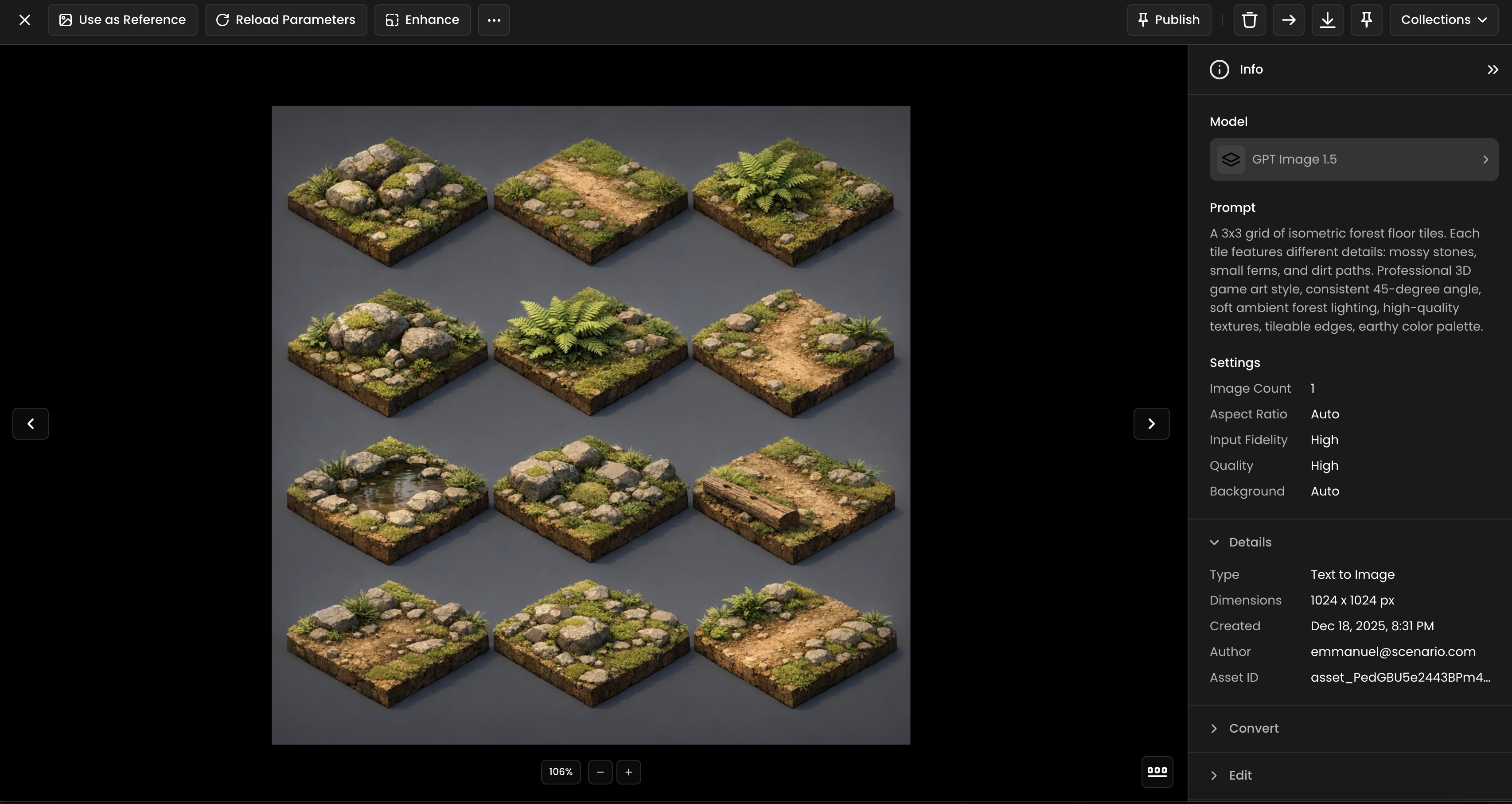
Grid Consistency: The model can generate structured layouts, such as a 6x6 grid, where each cell contains a distinct, requested object without visual interference between cells.
2. Image Editing
Editing in GPT Image 1.5 moves away from destructive global changes toward Precision Editing.
Semantic Locking: This allows for localized modifications. If a user requests an adjustment to a character's accessory, the background and the character’s primary features remain static.
Additive/Subtractive Logic: When adding an object, the model calculates shadows and perspective based on the existing scene. When removing an object, it performs context-aware in-painting to fill the gap.
Iterative Workflow: The model supports sequential edits. Users can modify an image through a series of prompts (e.g., "Change the lighting" $\rightarrow$ "Add a helmet") while maintaining the core composition of the original generation.
Prompting Structure & Strategy
GPT Image 1.5 is optimized for Modular Prompting. This structure separates the subject from the technical environment to prevent "style bleed."
A Simple recommended format can be
[Subject] + [Action] + [Environment/Lighting] + [Technical Parameters] + [Style]
Example Prompts:
UI Asset: "A mobile app interface for a market. Header text: 'Fresh Produce'. Sage green buttons, white background, sans-serif typography, clean layout."
Character Concept: "A knight in silver plate armor standing in a stone hallway. Side profile view. Soft torch lighting, 50mm lens, high-resolution textures, neutral color balance."
Negative Prompting: To bypass the model’s default training biases, use negative prompts such as:
yellow tint, plastic texture, oversaturated, blurry, extra limbs, distorted text.
Implementation in Scenario
In Scenario, you can you GPT Image 1.5 for a variety of tasks:
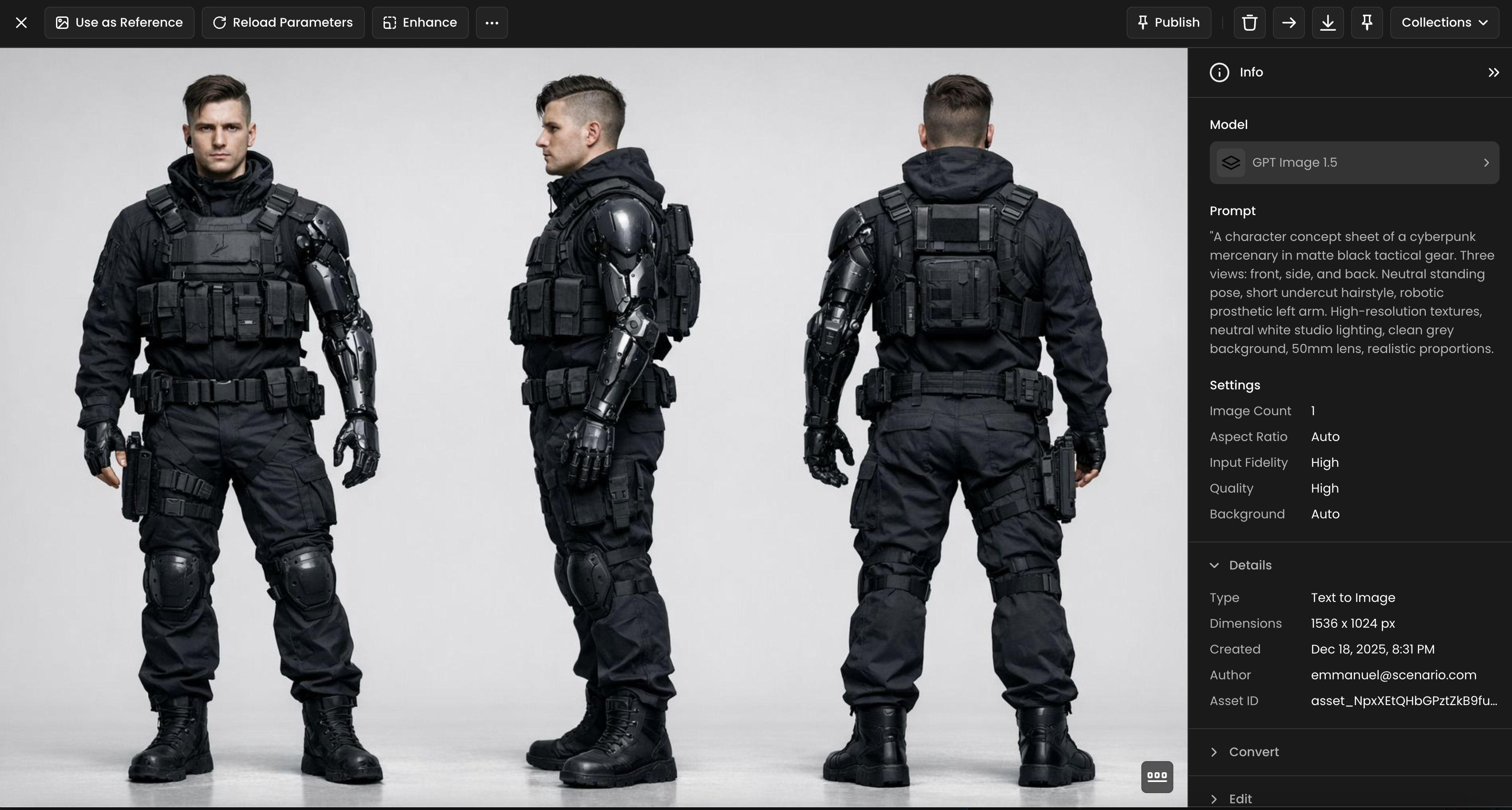
Asset Consistency: The model’s ability to "lock" features makes it suitable for creating character turnarounds (front/side/back views) that maintain the same armor and facial details.
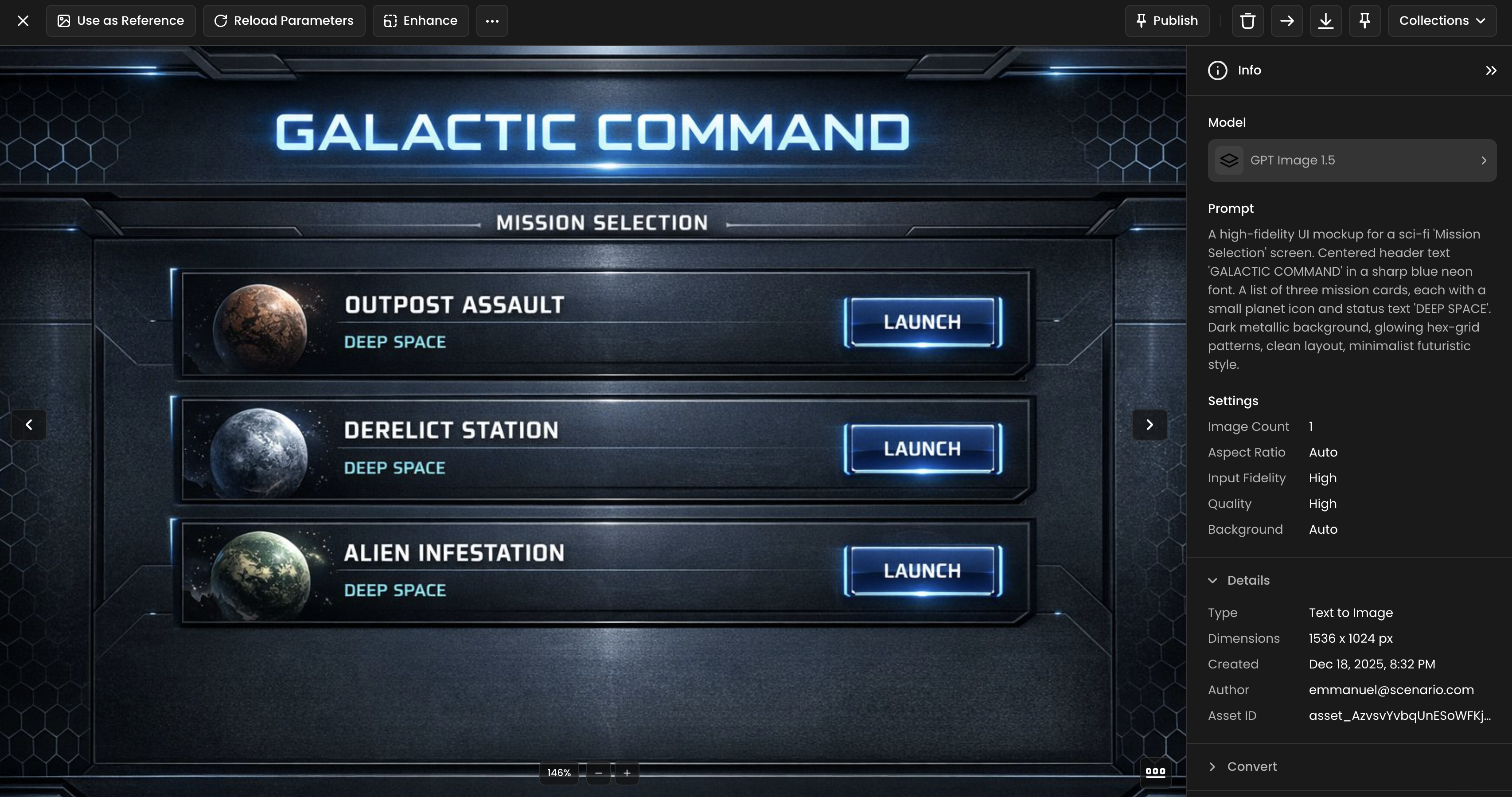
UI/HUD Design: Because it renders text accurately, it is frequently used to generate functional menu buttons, health bars, and inventory screens.
Sprite Sheets: The model's grid-handling capability allows for the generation of walking cycles or item sets that share a consistent pixel or art style.
Examples
To get the most out of this model, use domain-specific structures. Note how they transition from general subject description to technical camera and lighting constraints.
Character Design & Consistency
Goal: Create a consistent character base for a turnaround or sprite sheet.
Prompt: "A character concept sheet of a cyberpunk mercenary in matte black tactical gear. Three views: front, side, and back. Neutral standing pose, short undercut hairstyle, robotic prosthetic left arm. High-resolution textures, neutral white studio lighting, clean grey background, 50mm lens, realistic proportions."
UI & HUD Assets
Goal: Leverage the OCR (text rendering) capabilities for game interfaces.
Prompt: "A high-fidelity UI mockup for a sci-fi 'Mission Selection' screen. Centered header text 'GALACTIC COMMAND' in a sharp blue neon font. A list of three mission cards, each with a small planet icon and status text 'DEEP SPACE'. Dark metallic background, glowing hex-grid patterns, clean layout, minimalist futuristic style."
Environmental Tile Sets (Isometric)
Goal: Maintain spatial adherence for world-building.
Prompt: "A 3x3 grid of isometric forest floor tiles. Each tile features different details: mossy stones, small ferns, and dirt paths. Professional 3D game art style, consistent 45-degree angle, soft ambient forest lighting, high-quality textures, tileable edges, earthy color palette.
Item & Prop Sprites
Goal: Use the "Architect" approach for inventory items.
Prompt: "A 4x4 grid of medieval potion bottles. Each bottle has a unique shape and liquid color: red, blue, green, and purple. Stylized hand-painted art style, clean outlines, glass transparency effects, soft top-down lighting, plain white background, consistent item scale."
Photographic Reference
Goal: Break the "AI look" with specific technical lighting prompts.
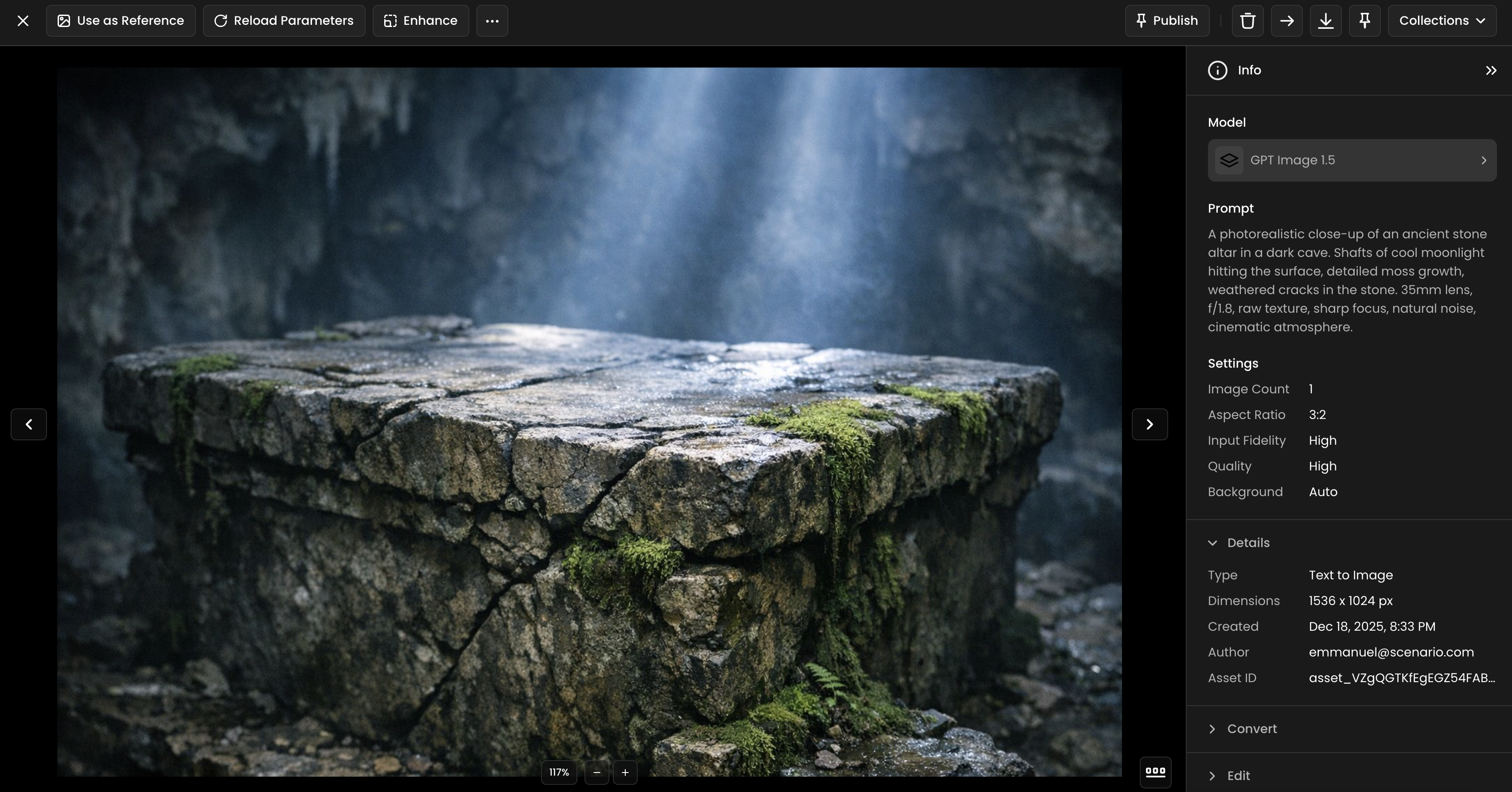
Prompt: "A photorealistic close-up of an ancient stone altar in a dark cave. Shafts of cool moonlight hitting the surface, detailed moss growth, weathered cracks in the stone. 35mm lens, f/1.8, raw texture, sharp focus, natural noise, cinematic atmosphere."
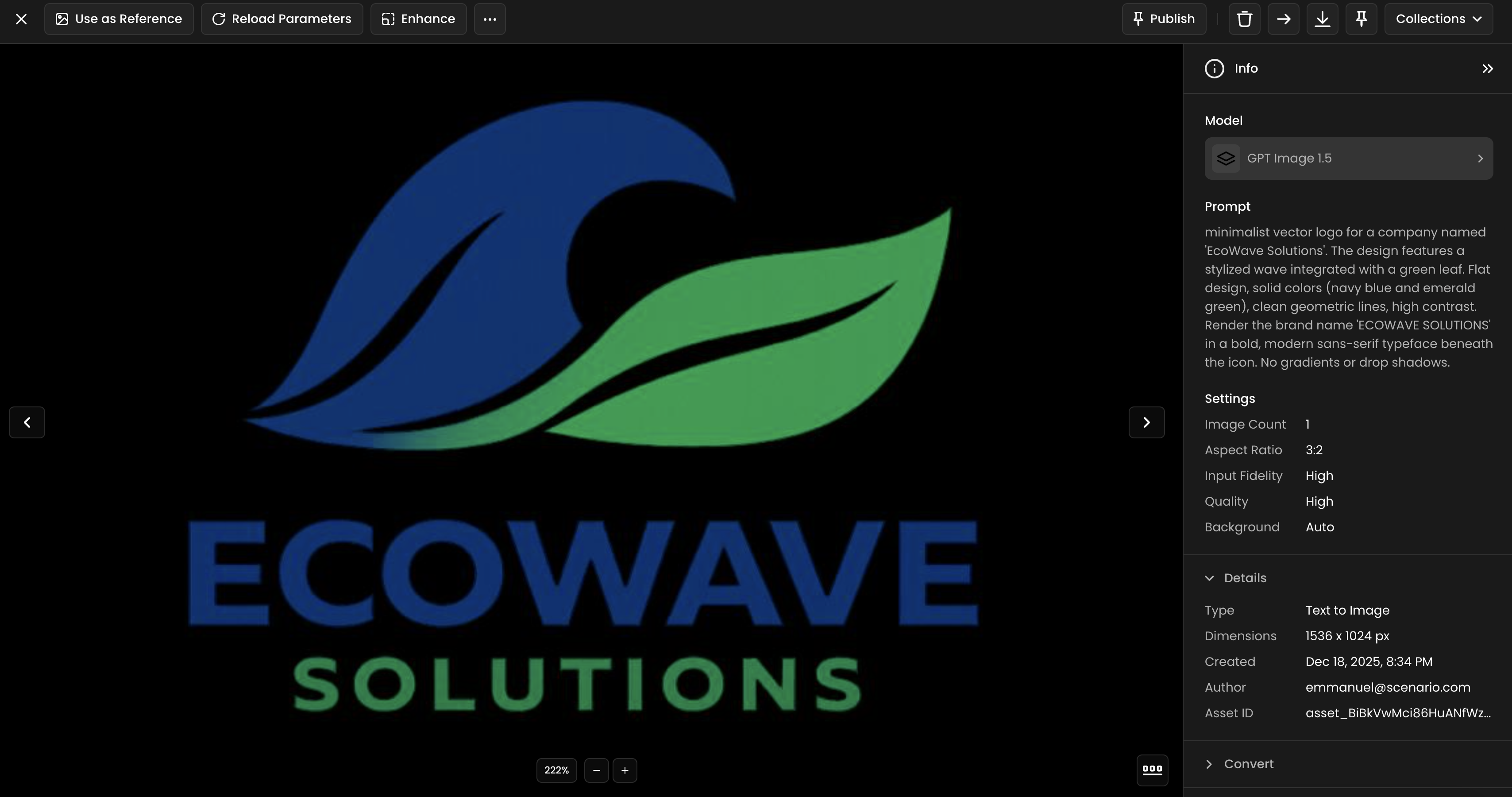
Branding & Identity
Prompt: A minimalist vector logo for a company named 'EcoWave Solutions'. The design features a stylized wave integrated with a green leaf. Flat design, solid colors (navy blue and emerald green), clean geometric lines, high contrast. Render the brand name 'ECOWAVE SOLUTIONS' in a bold, modern sans-serif typeface beneath the icon. No gradients or drop shadows.
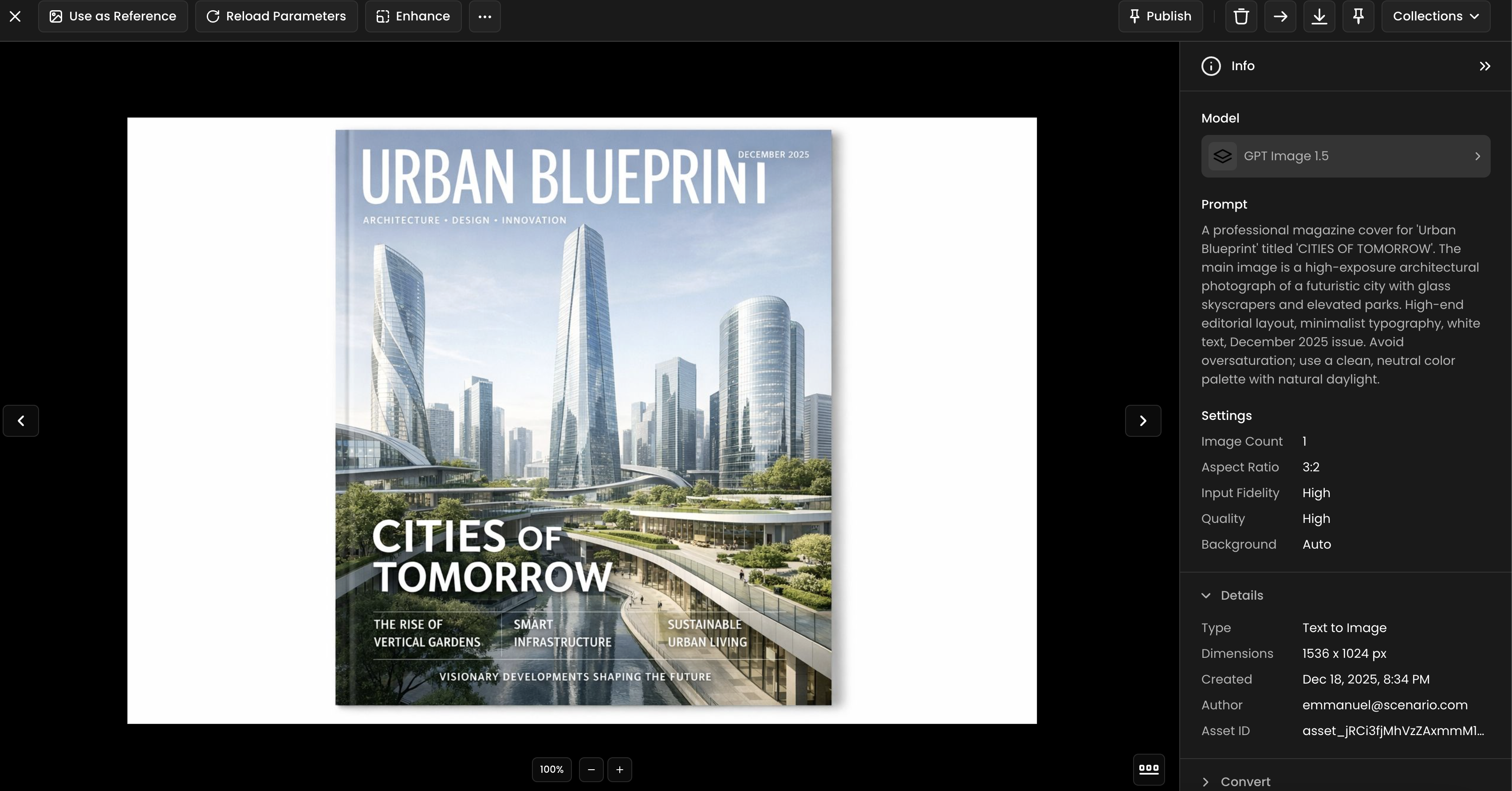
Editorial & Publishing
Prompt: A professional magazine cover for 'Urban Blueprint' titled 'CITIES OF TOMORROW'. The main image is a high-exposure architectural photograph of a futuristic city with glass skyscrapers and elevated parks. High-end editorial layout, minimalist typography, white text, December 2025 issue. Avoid oversaturation; use a clean, neutral color palette with natural daylight.
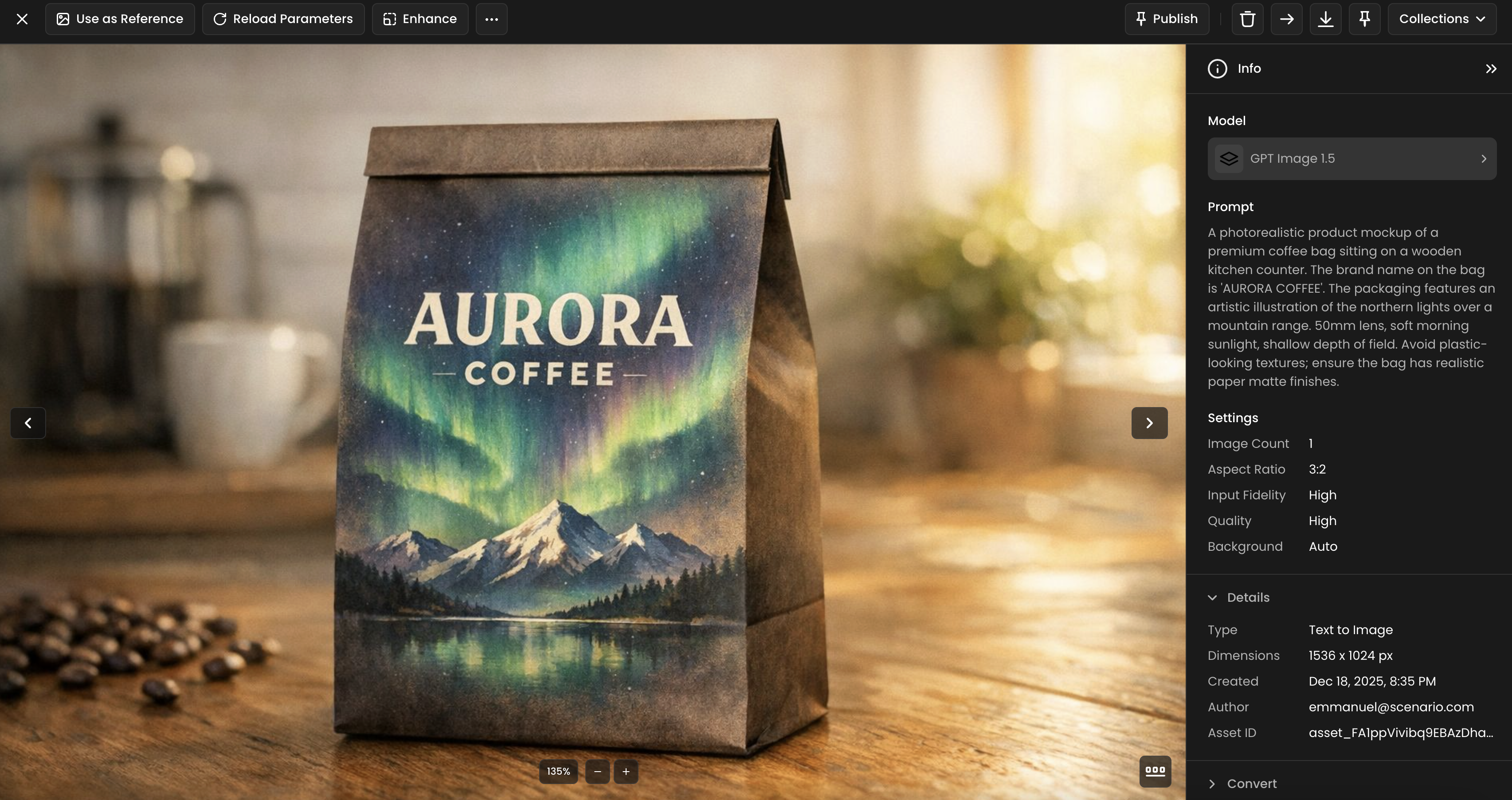
Product Packaging
Prompt: A photorealistic product mockup of a premium coffee bag sitting on a wooden kitchen counter. The brand name on the bag is 'AURORA COFFEE'. The packaging features an artistic illustration of the northern lights over a mountain range. 50mm lens, soft morning sunlight, shallow depth of field. Avoid plastic-looking textures; ensure the bag has realistic paper matte finishes.
Infographics & Data Viz
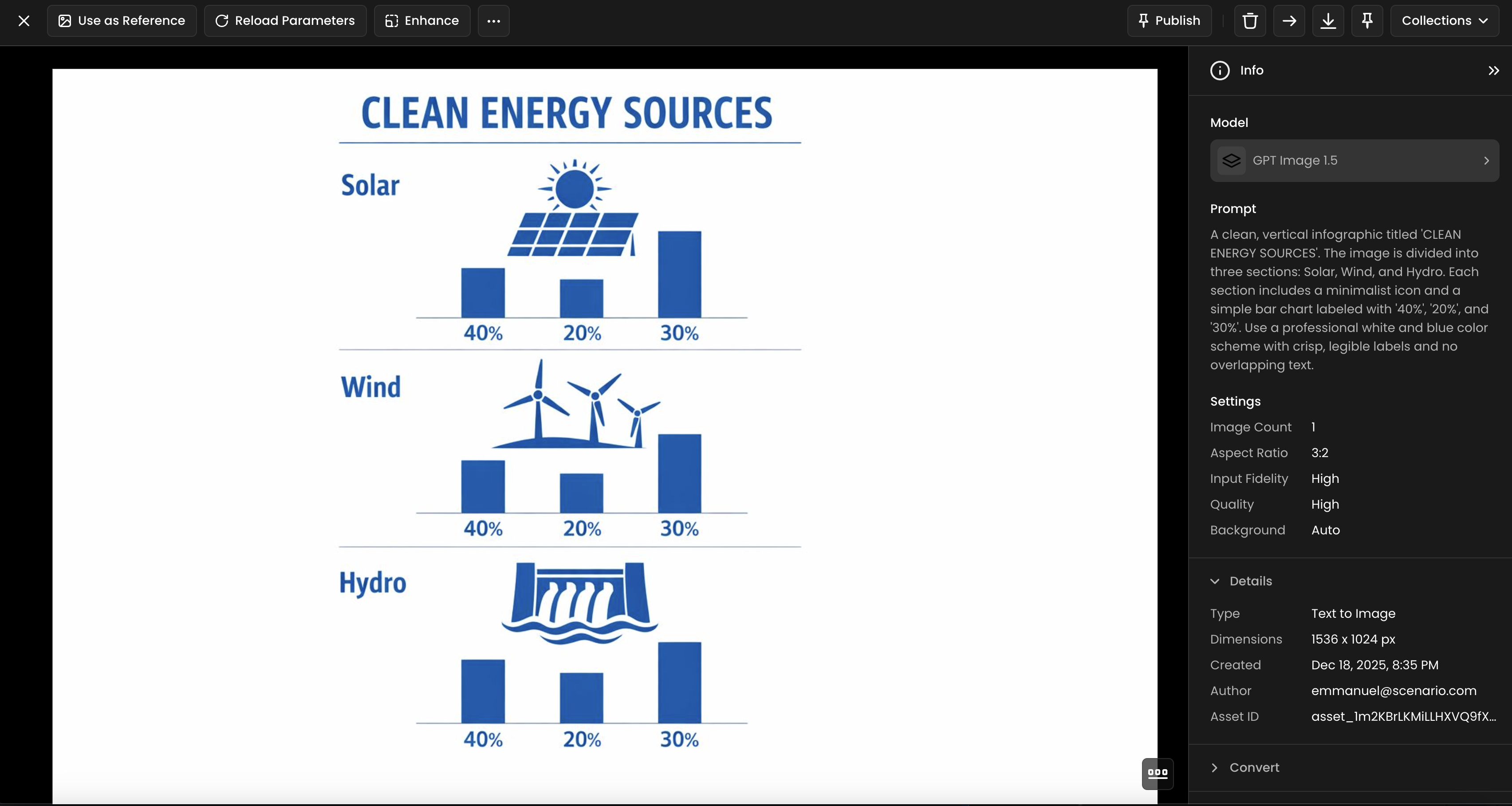
Prompt: A clean, vertical infographic titled 'CLEAN ENERGY SOURCES'. The image is divided into three sections: Solar, Wind, and Hydro. Each section includes a minimalist icon and a simple bar chart labeled with '40%', '20%', and '30%'. Use a professional white and blue color scheme with crisp, legible labels and no overlapping text.
Corporate & Marketing
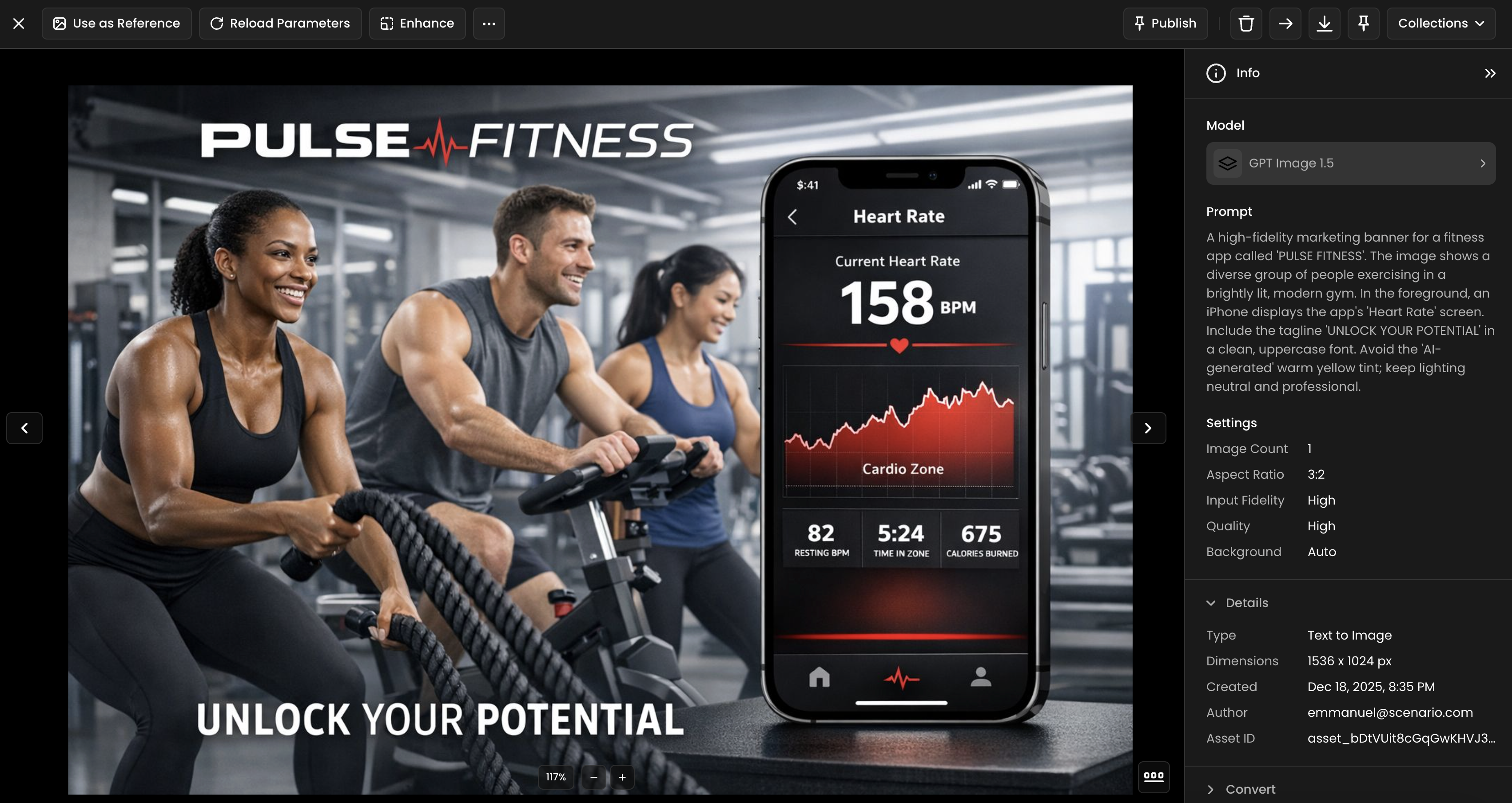
Prompt: A high-fidelity marketing banner for a fitness app called 'PULSE FITNESS'. The image shows a diverse group of people exercising in a brightly lit, modern gym. In the foreground, an iPhone displays the app's 'Heart Rate' screen. Include the tagline 'UNLOCK YOUR POTENTIAL' in a clean, uppercase font. Avoid the 'AI-generated' warm yellow tint; keep lighting neutral and professional.
Interior Design & E-commerce
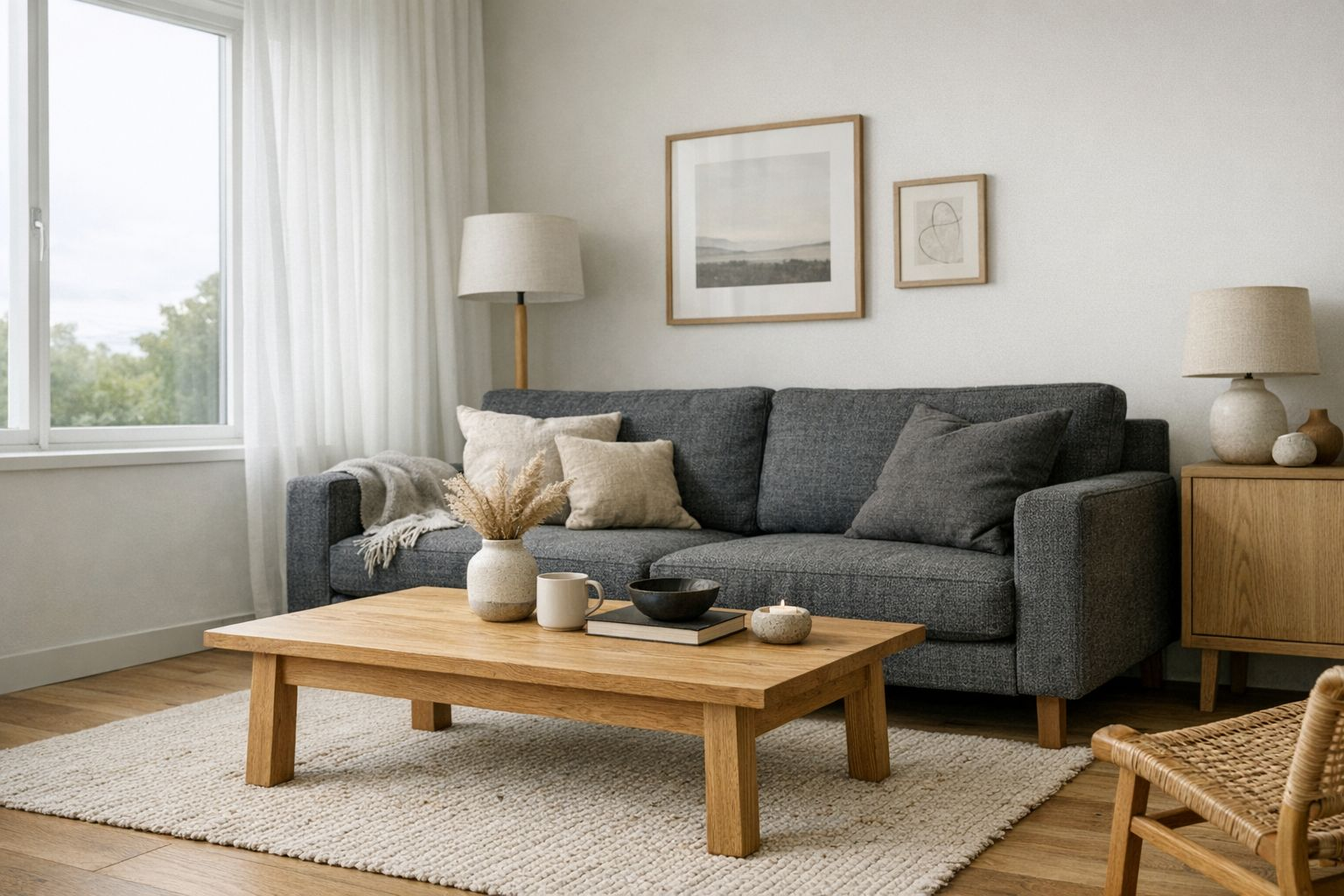
Prompt: A high-resolution architectural interior shot of a Scandinavian-style living room. Features a charcoal grey fabric sofa, a light oak coffee table, and a large window with sheer white curtains. Soft, overcast natural light. Avoid 'plastic' surfaces; ensure fabrics have visible weaving and wood has realistic grain. 35mm wide-angle lens.
Was this helpful?