Tencent Texture Edit: The Essentials
Last updated: April 9, 2026
The Tencent Texture Edit model provides a powerful way to iterate on the visual design of a 3D asset without ever touching its structural "bones". It is a purely textural engine, bridging the gap between raw geometry and a finished, high-quality look.
1. The Input System
The engine requires specific inputs to guide the re-texturing process:
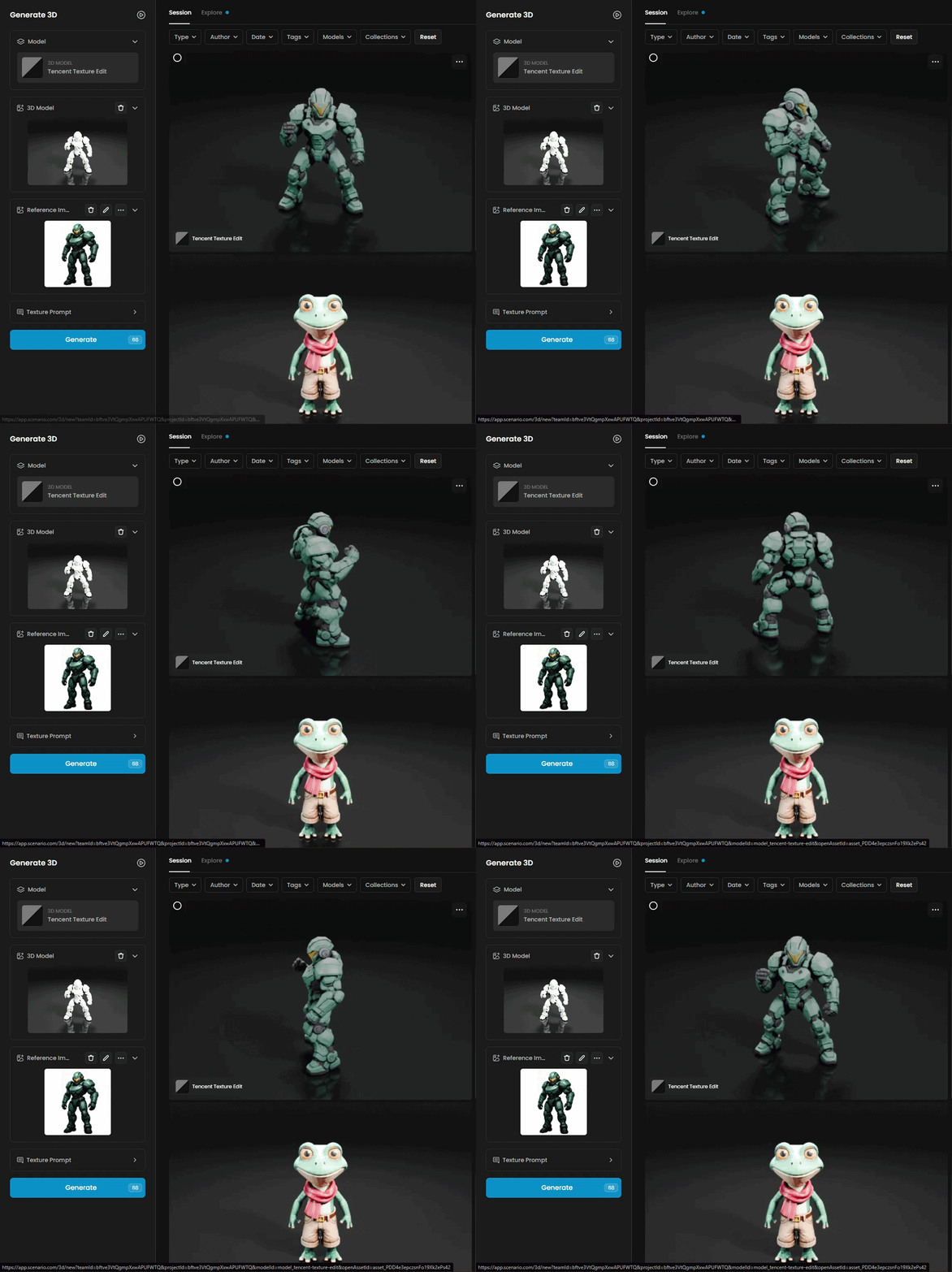
FBX 3D Model: The base mesh must be in FBX format to act as the canvas for the new texture.
Reference Image: A visual guide used to define the color palette, material properties, and overall style.
Texture Prompt: Alternatively, you can use a text-based field to describe specific details, such as "weathered leather" or "glowing runes," that the AI should apply to the surface.
2. Technical Performance and Integrity
This model is built specifically for creators who need high-quality textures but cannot afford changes to their mesh performance:
Geometry Preservation: The model does not modify vertices or geometry. It strictly regenerates the texture maps, making it safe for use on pre-optimized models with high vertex counts.
Stylistic Mapping: The engine is highly efficient at translating a 2D concept or text description into a 3D texture wrap that respects the existing surface orientation of the original file.
3. Optimized Workflow Integration
Since the geometry remains static, Tencent Texture Edit fits perfectly into a refined asset pipeline:
Step 1: Ensure your model has clean UVs using Tencent UV Unwrapping.
Step 2: Import the FBX mesh into Tencent Texture Edit.
Step 3: Use a Reference Image or a Texture Prompt to bake a new look onto the asset in seconds.
Conclusion
Tencent Texture Edit is the ultimate tool for "non-destructive" iteration. It allows you to explore hundreds of visual variations, from different outfits for a character to elemental skins for a weapon, without ever needing to re-generate your 3D model. It offers the creative freedom of AI with the technical stability of traditional 3D production.